Table of Contents Why Commercial Solar is the Strategic Choice for Scottish Businesses in 2026 Selecting the Right Infrastructure: Roof-Mounted vs….
Why Commercial Solar is the Strategic Choice for Scottish Businesses in 2026
In today’s challenging economic climate, commercial solar installers are no longer just providers of renewable technology; they are essential electrical partners who engineer high-capacity PV systems for financial resilience and long-term stability. For businesses in Edinburgh, the Borders, and across South Scotland, the energy landscape is defined by volatility. Relying solely on the grid is now a significant commercial risk. But what about our infamous weather?
Hook: The persistent myth about a lack of ‘Scottish sun’ is costing local businesses thousands in potential savings every year. The truth is that modern solar technology is exceptionally efficient in our specific climate. By 2026, investing in commercial solar has shifted from a ‘green option’ to a financial necessity, directly impacting your bottom line and future-proofing your operations against unpredictable energy costs. (role of solar power in the UK)
The Economic Case for Solar in South Scotland
- Grid Price Protection: A commercial solar installation insulates your business from the relentless price fluctuations of the UK energy market. By generating your own electricity, you fix a significant portion of your energy costs for the 25+ year lifespan of the system.
- Achieving Net Zero Targets: For Scottish SMEs committed to corporate sustainability, a solar PV system is one of the most impactful steps toward achieving Net Zero targets, enhancing your brand reputation and meeting regulatory expectations.
- Understanding LCOE: In simple terms, the ‘Levelised Cost of Energy’ (LCOE) is the total cost of your solar installation divided by the energy it produces over its lifetime. For most businesses, the LCOE of solar is now significantly lower than the price of buying electricity from the grid.
Addressing the Scottish Climate: Yield vs. Sunlight
- Cooler Temperatures, Higher Efficiency: Contrary to popular belief, solar panels operate more efficiently in cooler temperatures. Excessive heat can reduce output, making the temperate Scottish climate ideal for consistent, high-yield performance.
- Advanced Panel Technology: Modern systems often utilise innovations like bifacial panels, which capture reflected light from the ground or roof surface. This technology is particularly effective in Scotland, where diffuse light on overcast days still contributes significantly to energy generation.
- Actionable Tip: Always request a detailed, site-specific yield report from a prospective installer. This professional forecast will use local weather data and 3D modelling to provide an accurate projection of your system’s annual energy output, removing any guesswork.
Regardless of the system’s size, from large industrial arrays to smaller 6.6kW or 10kW configurations like those featured on skyhighsolar.com.au, professional design is the key to maximising energy yield in any climate.
Selecting the Right Infrastructure: Roof-Mounted vs. Ground-Array Systems
Choosing between a roof-mounted and a ground-mounted solar array depends entirely on your premises, available space, and strategic goals. A professional assessment will determine the optimal solution, but understanding the fundamentals is key. For roof installations, a thorough structural integrity check is non-negotiable to ensure the building can safely support the system’s weight. For flat industrial roofs, ‘ballasted’ systems are often used—these clever designs use weights to hold the panels in place without penetrating the roof membrane.
Hook: Are you sitting on a goldmine? That unused patch of land, oversized car park, or south-facing warehouse roof could be an untapped asset, ready to power your entire operation and generate revenue. (Scottish Government financing schemes)
Maximising Roof Space: Industrial and Warehouse Solutions
- Ideal Roof Types: Large industrial buildings with trapezoidal or standing seam metal roofs are perfect for commercial solar, as they allow for secure, cost-effective mounting systems that integrate seamlessly with the existing structure.
- Intelligent Design: A key part of professional design is organising the panel layout to avoid shading from rooftop obstacles like HVAC units, vents, or adjacent buildings, ensuring maximum energy capture throughout the day.
- Internal Link: Explore various designs and case studies for different roof types in our detailed overview of Commercial Solar solutions.
Ground-Mounted Arrays for Rural and Industrial Sites
- When to Choose Ground-Mount: This option is ideal when your roof space is limited, structurally unsuitable, or if you plan for significant future expansion. It offers greater flexibility in panel orientation and tilt for optimal energy generation.
- Maintenance Advantages: Ground-level access makes cleaning, inspection, and any necessary maintenance far simpler and safer, helping to protect your long-term investment.
- Actionable Tip: Before committing to a ground-mounted array, consult with your installer to check local planning permissions, especially if your business is located within or near a designated conservation area in the Borders or Lothians.
Beyond Panels: Integrating Battery Storage and EV Infrastructure
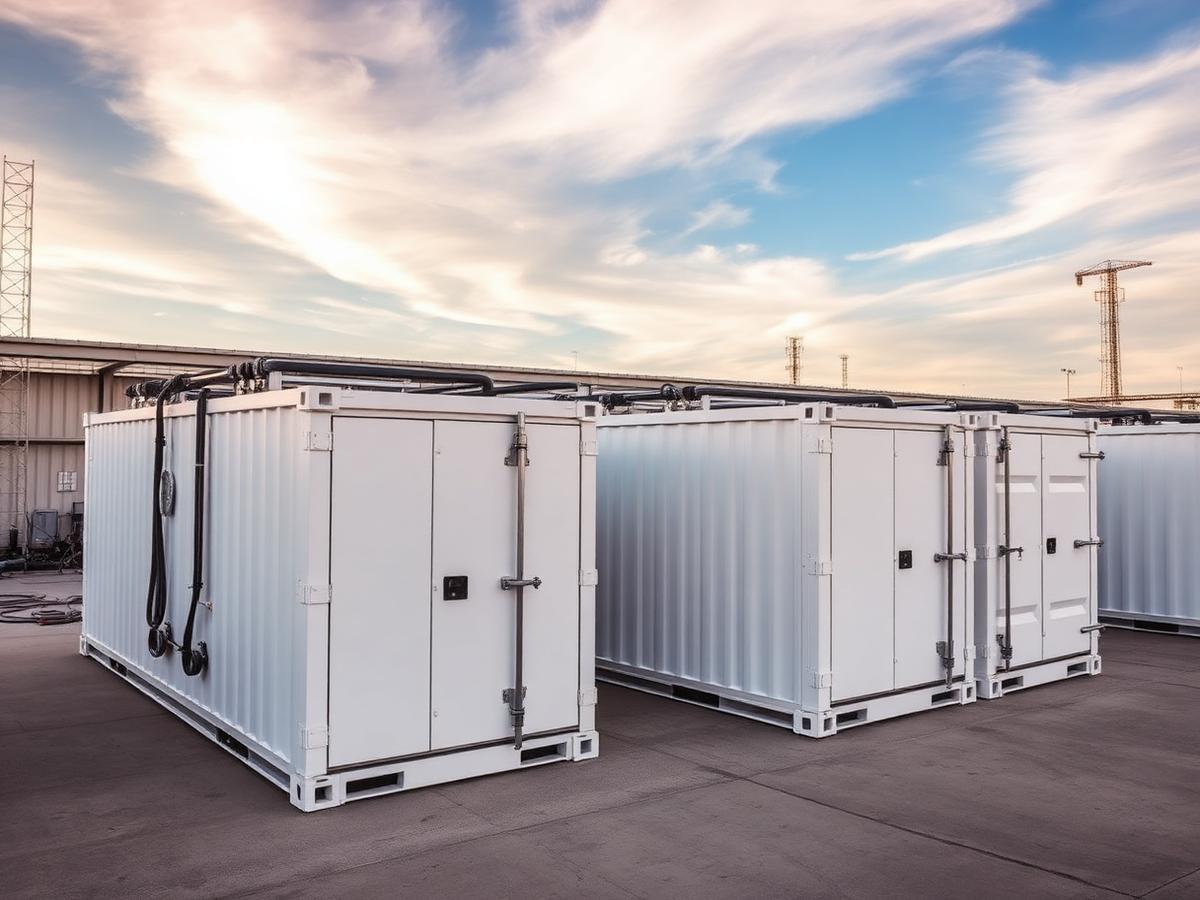
A solar PV system is the engine of your energy strategy, but without integrated technologies, you risk wasting a significant portion of the power you generate. On-site battery storage captures surplus solar energy produced during the day for use at night or during expensive peak-rate periods. This allows your business to perform ‘peak shaving’—drawing from your battery to reduce reliance on the grid when its prices are highest.
Hook: Imagine a system where your solar array powers your machinery all day, and then fuels your entire company fleet overnight whilst your staff are at home. This integrated ecosystem is not the future; it is available now. (professional installation standards)
Commercial Battery Storage: Energy on Demand
- The Power of ‘Load Shifting’: A commercial Battery Storage system allows you to store low-cost solar energy and deploy it when grid tariffs are at their peak. This simple act of ‘load shifting’ can dramatically reduce your overall energy expenditure.
- Prioritising Safety: For commercial applications, lithium-iron-phosphate (LFP) batteries are the industry standard. They offer superior thermal stability and a longer lifespan compared to other chemistries, ensuring the highest levels of safety and reliability for your business.
- Actionable Tip: Size your battery based on your business’s ‘baseload’ (your minimum required energy level) rather than your solar array’s peak production. This ensures the battery is appropriately sized to cover essential overnight operations without being excessively large or costly.
Future-Proofing with Commercial EV Charging
- Seamless Integration: Your solar PV system can be designed to power your EV Infrastructure, whether you require multiple AC chargers for staff or high-powered DC fast chargers for a commercial fleet.
- Harnessing ‘Smart Charging’: Intelligent charging systems can be programmed to prioritise the use of solar power, ensuring your fleet is charged with free, green electricity before drawing from the grid. This maximises your solar investment and minimises transport costs.
- Sibling Link: For a deeper dive into fleet electrification, our Professional EV Charger Installation Glasgow guide offers valuable insights for fleet managers across Scotland.
Navigating Compliance, EICR, and Professional Installation Standards
A commercial solar installation is a significant electrical project that must be managed with precision and a deep understanding of UK regulations. The process involves far more than simply fixing panels to a roof. It requires meticulous planning, grid applications, and a commitment to safety that protects your staff, your assets, and your investment.
Hook: Did you know that a cheap, non-compliant solar installation could invalidate your commercial insurance policy? Choosing a certified, professional installer is not just about quality; it is a critical business risk management decision.
Beyond solar, maintaining the integrity of your entire power system is vital; you can learn more about Satrack Electric and their professional advice on essential commercial electrical upgrades for business owners.
The Installation Roadmap for Businesses
- Feasibility and Survey: The process begins with a comprehensive feasibility study, including a structural roof survey and a detailed analysis of your energy consumption patterns.
- DNO Application and Approvals: For any system over 3.68kW per phase, a G99 application must be submitted to the Distribution Network Operator (DNO) — such as SP Energy Networks in South Scotland — before installation can begin. A professional installer manages this complex process on your behalf.
- Safe and Efficient Installation: The physical installation is carefully planned to minimise disruption to your business operations. Certified electricians and roofers work to the highest safety standards to ensure a seamless and secure setup.
- Commissioning and Handover: Once installed, the system is rigorously tested and commissioned. You will receive a full handover pack, including all certifications, warranties, and a guide to monitoring your system’s performance.
Actionable Tip: Ensure your chosen commercial solar installers are MCS (Microgeneration Certification Scheme) certified. This is not just a mark of quality; it is a mandatory requirement to be eligible for the Smart Export Guarantee (SEG) tariff, which pays you for any surplus energy you export to the grid.
Safety Standards and Long-Term Maintenance
- Protecting Your Investment: A proactive and reactive maintenance plan is essential to ensure your solar array operates at peak efficiency for its entire lifespan. This includes regular panel cleaning and inverter health checks.
- EICR Compliance: After your solar system is connected, your site’s Electrical Installation Condition Report (EICR) must be updated to reflect this major alteration to your electrical infrastructure. Regular EICR inspections are a legal requirement for commercial properties.
- Internal Link: Learn more about your legal duties and how to maintain compliance by reading our guide on Commercial Electrical Installations.

Securing Your Energy Future: Financing and Local Expertise
The upfront capital cost of a commercial solar installation can be a barrier for some businesses, but modern financing models make it more accessible than ever. Options like Asset Finance allow you to own the system from day one with manageable payments, whilst a Power Purchase Agreement (PPA) involves a third party installing a system on your roof at no cost, allowing you to buy the electricity it generates at a fixed, low rate.
When selecting a partner, choosing a local firm with deep roots in the Borders, Midlothian, and Edinburgh is paramount for responsive, long-term support. Eastern Electric combines 20 years of electrical expertise with 15 years of dedicated solar innovation, offering an unmatched level of integrated skill.
Actionable Tip: Before proceeding, check the latest business support databases, such as those from Business Gateway or the Scottish Government, for any available grants or loans for renewable energy projects in 2026.
Payback and ROI: What the Data Shows
- A Clear Financial Framework: For a typical 50kW system on a commercial roof in the Edinburgh area, businesses can expect a full return on investment within 4-7 years, followed by two decades of largely free electricity.
- The Smart Export Guarantee (SEG): This government-backed scheme mandates that licensed energy suppliers pay businesses for any surplus electricity they export back to the national grid, creating an additional revenue stream.
- Sibling Link: For a more detailed financial breakdown, see the cost-benefit analysis in our Solar Panel Installation Edinburgh guide.
Why a ‘Safe Pair of Hands’ Matters
- Understanding Local Standards: A local installer possesses an intrinsic understanding of Scottish building standards, planning nuances, and the specific operational requirements of the regional DNO.
- Integrated Facilities Management: Working with an installer who is also a commercial electrical contractor means they can manage your solar asset as part of a holistic facilities management plan, ensuring seamless operation and compliance.
- Final CTA: Take the first step towards energy independence. Book your commercial solar feasibility survey with Eastern Electric today and secure your business’s energy future.
Frequently Asked Questions
How long does a commercial solar installation take to complete?
The physical installation for a small-to-medium commercial system (e.g., 50kW) typically takes 1-2 weeks. However, the entire process, including the DNO application (G99), surveys, and design, can take 2-4 months from initial contact to commissioning.
Do I need planning permission for solar panels on my business premises in Scotland?
In many cases, roof-mounted solar panels are considered ‘permitted development’ and do not require planning permission. However, restrictions apply for listed buildings, conservation areas, and large-scale ground-mounted arrays. A professional installer will advise on your specific obligations.
What is a G99 application and why does my business need one?
A G99 application is a formal request made to the local Distribution Network Operator (DNO) to connect a power-generating system (like solar PV) to the national grid. It is a legal requirement for any system with an output greater than 3.68kW per phase and ensures the grid remains stable and safe.
How much can a business save on energy bills with solar PV?
Savings vary based on system size and energy usage, but many businesses can reduce their electricity bills by 50-70% or more. With the addition of battery storage, it’s possible to achieve even greater independence from the grid.
Can solar panels be installed on a flat industrial roof?
Absolutely. Flat roofs are ideal for commercial solar. Installers use non-penetrating, ballasted mounting systems that sit on the roof, held down by weights. This avoids compromising the roof’s waterproof membrane and allows panels to be angled for optimal sun exposure.
What maintenance is required for commercial solar panels?
Commercial solar systems are very low maintenance. The primary tasks are periodic panel cleaning to remove dirt and debris that can affect performance, and annual checks of the inverters and electrical components by a qualified technician to ensure everything is operating safely and efficiently.
Are there any grants available for commercial solar in Scotland in 2026?
Grant availability changes frequently. Whilst direct grants are less common, businesses can benefit from government-backed loan schemes and significant tax advantages, such as the ability to claim capital allowances on the investment. Always check with Business Gateway Scotland for the latest information.
Will solar panels work on cloudy days in the Scottish Borders?
Yes. Solar panels generate electricity from light, not direct sunlight or heat. While output is highest on bright, sunny days, they still produce a significant amount of energy on the overcast days common in the Scottish Borders, making them effective year-round.
Want this applied to your project?
Get a free assessment — we'll send you real numbers, not generic ones.